Best Foods to Include in an Anti-Inflammatory Diet
Bloating after a meal, brain fog that won’t lift , joint stiffness,low energy, or that constant feeling of being off. These symptoms may not be random, they can sometimes be associated with ongoing inflammation in the body. Inflammation itself isn’ the enemy. It’s your body’s natural defence mechanism, designed to protect and support healing. But when it becomes chronic, it may start affecting different functions of the body. The goal isn’t to suppress inflammation but to understand it and support your body through the right lifestyle choices. Let’s explore a natural, lifestyle led approach to reducing chronic inflammation starting with the best foods to include in an anti inflammatory diet.
What Is an Anti-Inflammatory Diet?
There is no specific anti-inflammatory diet. It is an eating pattern developed around whole and minimally processed foods: lots of vegetables and fruit, legumes and whole grains followed by nuts and seeds, healthy fats and herbs and spices. At the same time, it limits refined carbohydrates and sugary drinks along with deep fried foods and ultra processed snacks.
It is recommended to fill about half your plate with vegetables and fruit including combining cereals and millets with pulses and keeping salt, added sugar, trans fat and ultra processed foods low.
The Best Foods in an Anti-Inflammatory Diet
1. Turmeric (Haldi)
Turmeric gets its colour from curcumin which is a compound researched for its antioxidant and anti-inflammatory effects. Curcumin on its own is not absorbed properly and research recommends that black pepper, which contains piperine can enhance absorption. Add haldi to dal, sabzi and khichdi with a pinch of Black pepper and a little oil. A lot of studies use concentrated supplements so the impact of cooking amounts is less clear.
2. Ginger (Adrak)
Ginger contains of gingerols and other plant compounds usually studied for their anti inflammatory properties. Use fresh ginger in tea, soups, chutneys, kadha or chop it into dal tadka. It is simple to enjoy daily in small amounts.
3. Garlic (Lehsun)
Garlic contains of sulphur compounds that studies connect with antioxidant activity. Crush it and let it rest for a few minutes before you cook. Then add it in tadkas, chutneys and vegetable dishes. Raw garlic chutney is a traditional choice.
4. Leafy Greens (Palak, Methi, Sarson, Chaulai)
Greens provide fibre and folate along with vitamin K and polyphenols. Palak dal and methi thepla followed by sarson saag and chaulai sabzi make them easy to add. Light steaming or sautéing helps in avoiding overcooking vegetables.
5. Dals and Legumes (Moong, Masoor, Chana, Rajma)
Pulses are high in fibre and protein along with plant compounds that encourage gut health and keep blood sugar stable. Aim for a bowl of dal, chana, rajma or sprouts daily. Pair pulses with cereals or millets for a more complete protein.
6. Omega 3
These are plant sources of omega-3 fat (ALA) which are useful for vegetarians. Add a spoon of ground flaxseed to flour dough, curd or smoothies and consume a few walnuts as a snack. Grinding the flaxseed makes it easier to absorb.
For non vegetarians, oily fish offers EPA and DHA omega 3 fats. Mathi (sardine), bangda (mackerel) and hilsa are traditional options. Steam, grill or cook them in a light curry instead of deep frying.
7. Vitamin C-rich Fruits (Guava, Jamun, Papaya)
Amla is high in vitamin C and brightly coloured fruits offer polyphenols and antioxidants. Eat whole fruit instead of juice for the fibre. Amla works as a chutney, murabba in moderation or fresh slices with a pinch of salt.
8. Millets and Whole Grains (Ragi, Bajra, Jowar, Oats)
Whole grains and millets consist of more fibre than polished rice and refined flour which helps in controlling blood sugar. Replace some white rice or maida with ragi roti, bajra khichdi, jowar bhakri or vegetable oats upma.
9. Curd, Buttermilk and Other Fermented Foods (Dahi, Chaas, Idli, Dosa)
Fermented foods may encourage a healthy gut microbiome which is connected to inflammation. Plain curd, chaas and fermented idli and dosa batter are easy regular choices. Select unsweetened versions.
Quick Comparison Table: Anti-Inflammatory Indian Foods
| Food | Key compounds | Easy ways to eat | Good to know |
| Turmeric (haldi) | Curcumin | Dal, sabzi, khichdi, haldi doodh | Add black pepper and a little fat |
| Ginger (adrak) | Gingerols | Chai, kadha, chutney, tadka | Large amounts may upset the stomach |
| Garlic (lehsun) | Sulphur compounds | Tadka, chutney, sabzi | Crush and rest before cooking |
| Leafy greens | Fibre, folate, polyphenols | Palak dal, methi thepla, sarson saag | Lightly cook; vary the greens |
| Dals and legumes | Fibre, protein | Dal, chana, rajma, sprouts | Soak and cook well for easier digestion |
| Flax, walnuts, chia | Omega-3 (ALA) | Roti dough, curd, snacks | Grind flaxseed; watch portions |
| Fatty fish | EPA and DHA omega-3 | Steamed, grilled or light curry | Avoid deep-frying |
| Amla and fruits | Vitamin C, polyphenols | Whole fruit, chutney, fresh amla | Choose whole fruit over juice |
| Millets and whole grains | Fibre, minerals | Ragi roti, bajra khichdi, oats | Replace refined grains gradually |
| Curd and chaas | Probiotics, protein | Raita, chaas, idli, dosa | Choose unsweetened |
How to Build an Anti-Inflammatory Thali?
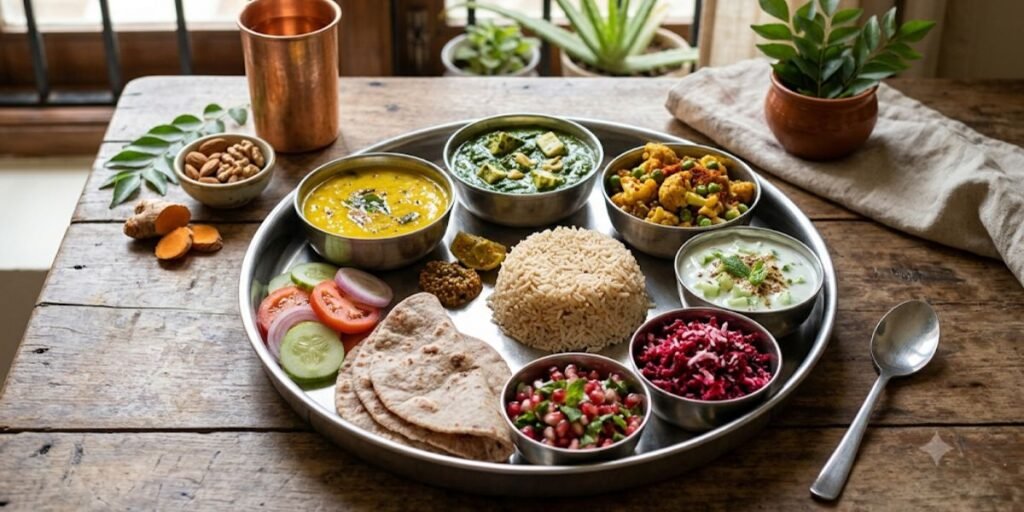
A simple way to apply all of this is to plan the thali. Fill about half with vegetables and greens, a quarter with whole grains or millets, and a quarter with dal, legumes, fish or paneer. Add a small bowl of curd or chaas, season generously with haldi, jeera, ginger and garlic, and use a modest amount of oil. Fresh fruit makes a better dessert than packaged sweets on most days.
Foods to Limit
An anti-inflammatory diet works best when you also cut back on foods that tend to promote inflammation or crowd out healthier choices:
- Deep-fried snacks such as samosa, pakora and namkeen, and reused frying oil
- Refined flour, white bread, bakery items and sugary drinks
- Sweets, packaged biscuits and other ultra-processed foods
- Vanaspati and other sources of trans fat
- Excess salt (Aim for under 5 g a day, about one level teaspoon)
- Red and processed meats in large amounts
A Sample Indian Anti-Inflammatory Day
- Breakfast: Ragi dosa or vegetable oats upma with chutney, or moong chilla with mint chutney.
- Lunch: Jowar or whole-wheat roti, palak dal, mixed vegetable sabzi, cucumber raita and a salad.
- Snack: A handful of walnuts, a guava or roasted chana with a cup of ginger tea.
- Dinner: Bajra khichdi with vegetables, or grilled fish with sautéed greens, and a bowl of chaas.
How Does Indyte’s Dietitian Priyanka Help in Providing an Anti-Inflammatory Diet?
Dietitian Priyanka Mittal is the founder of Indyte and has 14 years of experience in the Food and Nutrition Industry. She helps clients develop an anti-inflammatory diet that is suitable for their health and lifestyle along with food preferences.
She initially begins by getting to know your health history and daily routine. Then she creates a customized weekly plan designed around simple and wholesome Indian foods like dals and everyday spices. She also advises you on what to limit like excess sugar. This approach is specifically beneficial for conditions where inflammation has an impact like arthritis, high uric acid and gut issues.
Hear from our clients
Real clients share their experience on theIndyte YouTube channel. A few short stories:
Ready for a plan built on your reports?Book a consultation or message us onWhatsApp.
Frequently Asked Questions
Q1. What is the best anti-inflammatory food in an Indian diet?
No single food does the job. Haldi, ginger, leafy greens, dals, nuts and seeds, millets and fruits work best together as part of a balanced pattern.
Q2. Is haldi doodh really anti-inflammatory?
Turmeric contains curcumin, which has been studied for its anti-inflammatory properties, and black pepper helps absorption. Evidence mostly comes from concentrated supplements, so haldi doodh is a pleasant habit that may support your diet but is not a treatment.
Q3. Can vegetarians get enough omega-3 fats?
Vegetarians can get ALA from flaxseed, walnuts, chia and mustard or soybean oils. The body converts only some ALA to EPA and DHA, so discuss algae-based supplements with a doctor if you are concerned.
Q4. Can an anti-inflammatory diet cure arthritis?
No. The diet does not help in curing arthritis or other conditions. But having a healthy eating lifestyle helps in relieving symptoms and supports overall health.
Q5. Should I take turmeric or curcumin supplements?
Consult your doctor first. Supplements can have side effects like stomach upset and may interact with a few medicines such as blood thinners and diabetes drugs.
Q6. Can I still enjoy sweets and fried snacks?
You can enjoy sweets occasionally. An anti-inflammatory diet is about your day to day pattern and not perfection. Keep festival sweets and fried snacks limited and infrequent.
Q7. How long does it take to notice benefits?
It varies. Some people notice better energy or digestion within weeks, while changes in markers like blood sugar or cholesterol may take months. Consistency matters more than perfection.
Q8. Is this diet safe for people with diabetes or other conditions?
Many of these foods suit diabetes and heart health, but portions, medicines and allergies matter. Check with your doctor or a registered dietitian before making big changes.
Q9. Are ghee, mustard oil and coconut oil okay?
Use all oils in moderation. ICMR advises limiting fats, avoiding vanaspati and not reusing frying oil. Rotating different oils and keeping portions small is a sensible approach.
Q10. How does Dt. Priyanka help in providing an anti-inflammatory diet?
Dt. Priyanka checks all your reports and guides you on what to eat and what to avoid. You can start with a free 15 min consultation with her.
Conclusion
Eating to reduce inflammation does not mean giving up Indian food. It means leaning on dals, vegetables, greens, millets, curd, nuts and spices, cooking with less oil and fewer refined ingredients, and making small, consistent changes. Start by adding two or three foods from this list each week, and see how your plate evolves.

Related Posts
15 Best Foods for Gut Health: What to Eat Daily for a Healthy Gut?
Your gut is home to trillions of microorganisms that make up the gut microbiome. These…
Effective Natural Remedies for Managing SIBO Symptoms!
Effective Natural Remedies for Managing SIBO Symptoms! – Small intestinal Bacterial Overgrowth (SIBO) is distinguished…