Customized Diet Plan in India vs Trending Diet
Open any social media app and within a few minutes you will get to see a new “miracle” diet: keto for losing fat quickly, intermittent fasting to get a flat stomach, a high protein plan for muscle, a detox juice for glowing skin. Each comes with dramatic before and after photos and a confident influencer. Still, India’s health picture portrays a different story. Diabetes, high blood pressure and fatty liver along with thyroid issues, PCOS and obesity keep on rising even after multiple trending diet plans. The reason is simple: bodies and budgets along with cultures and medical histories vary. A plan that is suitable for one person can quietly impact another. Customized diet plan developed around your own body and lifestyle is the smarter and safer path.
What is the Problem with Trending Diet Plans?
Trending diets are only successful when they get attention. They are simple to explain in a reel and easy to follow for a week or two. But they are built for a general audience usually based on a single celebrity’s experience or a selectively quoted study. Here are the reasons why they usually fall short.
- They don’t pay attention to individual differences. Age, gender, body composition, genetics, sleep, stress, activity and medical conditions all impact how your body reacts to food.
- They are often unsustainable. Plans that cancel out entire food groups are tough to handle for months so weight and habits generally bounce back.
- They may clash with Indian food culture. A lot of popular diets are developed around Western foods like avocados and oats alongside berries and whey which can be expensive or hard to fit into regular Indian meals.
- They can create nutrient gaps. Avoiding grains, dairy or fats without guidance can result in deficiencies in fibre, calcium, iron or B vitamins.
- They can be unsafe for people with health conditions. What is best for a healthy gym-goer may be harmful for someone with diabetes or high cholesterol.
What is Customized Diet Plan?
Customized diet plan means developing your eating plan around you. Rather than copying a trend, a qualified dietitian such as Dietitian Priyanka or a nutritionist looks at your health data, lifestyle and goals and then creates a plan you can actually follow. It generally considers:
- Health status: blood sugar, HbA1c, lipids, blood pressure, thyroid function, vitamin levels, kidney and liver health.
- Body and lifestyle: age, height, weight, body composition, job type, sleep, stress and exercise.
- Food preferences: vegetarian, eggetarian or non-vegetarian, regional cuisine, religious fasting, allergies and intolerances.
- Budget and routine: what you can afford, cook and carry to work, plus your schedule and family eating patterns.
- Goals: weight loss, weight gain, better energy, disease management, muscle building or simply healthier ageing.
Why India Needs Personalised Nutrition More Than Most?
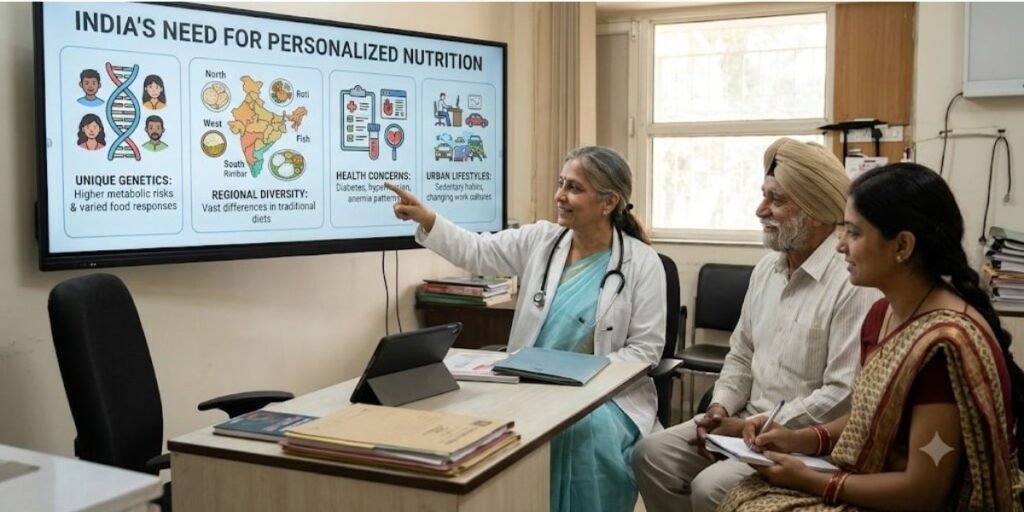
1. A Heavy Burden of Lifestyle Disease
India has been called the diabetes capital of the world. A large national study estimated that more than 100 million Indians live with diabetes and well over 100 million more have prediabetes, along with very large numbers affected by hypertension and obesity. With risk this widespread, generic advice cannot match each person’s needs. Someone with prediabetes needs a different approach from someone with a high-cholesterol family history or a thyroid disorder.
2. The “Thin-Fat” Indian Body
South Asians tend to carry more body fat, especially around the abdomen, at a lower body weight than many other populations. This means an Indian with a “normal” BMI can still have high visceral fat and metabolic risk. Diet plans that rely only on the weighing scale or BMI can miss this. Personalised assessment looks at waist size, body composition and blood markers, not just kilograms.
3. Carbohydrate-Heavy Traditional Meals
Many Indian diets lean heavily on rice, roti, poha, bread and sweets, with relatively low protein and fibre. Instead of banning carbohydrates, which is unrealistic and unnecessary for most people, personalisation adjusts portion sizes, pairing and timing. Adding dal, curd, vegetables, sprouts or paneer to a meal can change how your blood sugar responds.
4. Huge Regional and Cultural Variety
A diet that works for a Punjabi family eating wheat, dairy and ghee will look very different from what suits a Kerala household eating rice, coconut and fish, or a Gujarati vegetarian family. Add festivals, fasting days such as Navratri or Ekadashi, and joint-family cooking, and a one-size-fits-all plan becomes impractical. Personalised nutrition respects local ingredients and traditions rather than fighting them.
5. Widespread Deficiencies Alongside Obesity
India faces a double burden: rising excess weight and persistent nutrient gaps. Vitamin D, vitamin B12, iron and protein deficiencies are common, particularly among vegetarians, women and urban office workers. A trending crash diet can worsen these gaps. A personalised plan, ideally guided by blood tests, can correct them safely.
6. Conditions Like PCOS and Thyroid Disorders
Many Indian women live with PCOS, hypothyroidism or anaemia. These conditions affect appetite, weight, energy and hormones, and they need food plans tailored to the condition and the person. Following a generic fat-loss diet can leave symptoms unmanaged or even worse.
What Are The Common Trending Diets?
Keto and Very Low-Carb Diets
These can cause quick early weight loss, but strict versions are hard to follow in an Indian meal setting and may raise concerns for people with high cholesterol, kidney issues or on diabetes medication. They should not be started without medical supervision.
Intermittent Fasting
Time-restricted eating suits some people, but it may not suit those with diabetes on insulin or tablets, pregnant or breastfeeding women, people with a history of eating problems, or those with acidity and reflux. Timing needs to match your medication and work schedule.
High-Protein and Supplement-Driven Plans
Many Indians do need more protein, but heavy reliance on powders and bars is not always necessary. Anyone with kidney disease should check with a doctor first.
Detox Drinks and Juice Cleanses
Your liver and kidneys already handle detoxification. Juice-only cleanses often remove fibre, spike sugar and leave you tired, hungry and prone to rebound eating. You can also check Indyte’s Renal Disorder and Fatty Liver diet programs.
What are the Benefits of Personalised Nutrition?
Long lasting results: Plans that are suitable for your lifestyle so you choose to follow them.
Safer option for medical conditions: Food choices work in coordination with your medicines and lab results.
Enhanced energy and digestion: balanced meals help in gaining constant energy and gut health.
Budget friendly: Uses cost effective and locally found foods instead of expensive superfoods.
Flexible and culturallyrelated: it involves your favourite foods and festivals along with family meals.
Life long habit change: aims at skills and understanding without any short term limitation.
How to Get Started with Personalised Nutrition in India?
Go for a health checkup: tests like HbA1c, vitamin D and more provide useful inital points.
Visit a certified professional: look for a registered dietitian like Dietitian Priyanka Mittal
Share your full daily routine: Add your meals and snacks along with work hours, fasting and eating out habits.
Set realistic goals: Focus on slow improvement instead of a quick change in 30 days.
Review and adjust: Your needs change so your plan should also change every few weeks or months.
Frequently Asked Questions
Q1. Is personalised nutrition only for people with diseases?
No. Healthy people benefit too, because it improves energy, weight control and prevention of future problems.
Q2. Can I follow a personalised plan with Indian home food?
Yes. A good plan uses your regular roti, rice, dal, sabzi and regional dishes, adjusting portions, combinations and cooking methods.
Q3. Are trending diets always bad?
Not always, but they are not designed for you. Some ideas may suit you, but check with a qualified professional, especially if you have a health condition.
Q4. Is it expensive to follow a personalised diet?
Not necessarily. Personalised plans often rely on affordable local foods. Consultation and test do have a price but you can avoid bigger medical conditions in the future.
Q5. How long does it take to see results?
Early progress in energy and gut health may seem to appear in a few weeks. Weight and lab changes generally take a few months and results depend on consistency.
Q6. Can vegetarians get enough protein?
Yes, with planning. Dals, legumes, curd, paneer, milk, soy, nuts and sprouts can meet needs. A dietitian can check quantity and test for B12.
Q7. Is intermittent fasting safe for everyone?
No. People with diabetes, pregnancy, acidity or a history of disordered eating should speak with a doctor first.
Q8. Who should I consult for personalised nutrition?
A qualified dietitian is suitable for working with your doctor if you have a medical condition.
Q9. Do I need supplements?
Only if tests or a professional show a need. Many deficiencies in India, such as vitamin D and B12, may need supplements, but this should be guided by results.
Q10. How to personalise nutrition?
It is designed around your health, body, lifestyle, food preferences and goals, rather than a generic plan for everyone.
How Indyte Helps in Personalising Nutrition?
Indyte, founded by Dietitian Priyanka Mittal, helps in customizing diet with the help of one to one guidance. It usually begins with a free 15 minute consultation that includes a conversation about your lifestyle and medical history along with eating habits and goals. Your plan is designed according so that it reflects in your body.
Plans are designed for conditions like diabetes, thyroid disorders, fatty liver and gut issues. They also provide kids’ nutrition, weight management and vegetarian or vegan needs using local foods and ingredients.
Support continues after the plan is made. Clients get weekly diet plans, weekly consultations, WhatsApp support and progress tracking, with adjustments based on results, body signals and lab values. Indyte says its approach is backed by science, not trends and works alongside your doctor.
Hear from our clients
Real clients share their experience on theIndyte YouTube channel. A few short stories:
Ready for a plan built on your reports?Book a consultation or message us onWhatsApp.
Conclusion
Trends come and go, but your body stays with you for life. In a country as diverse as India, with its mix of cuisines, climates, incomes and health challenges, no single diet can fit everyone. Personalised nutrition replaces guesswork with evidence, respects your culture and gives you a plan you can maintain. Before starting the next viral diet, ask a better question: what does my body actually need? A qualified professional like Dt. Priyanka Mittal can help you answer it.

Related Posts
7 Day Fat Loss Diet Plan For Male
7 Day Fat Loss Diet Plan For Male – There is no adequate single meal…
1300 Calorie Indian Diet Plan
One of the most common questions I hear from clients trying to lose weight is,…